Steel production is one of the most carbon-intensive industrial activities, being responsible of about 8% of global greenhouse gas emissions. Moreover, ironmaking industry is at a critical juncture, with over 70% of global coal-fired blast furnaces requiring significant reinvestment by 2030, presenting a time-sensitive window to shift toward cleaner technologies. One of the most promising solutions to achieve carbon-neutral steel production is the Direct Reduction - Electric Arc Furnace (DR-EAF) technology route. By integrating hydrogen as reducing agent and energy vector, CO2 emissions and also environmental impacts are significantly reduced in both the metallurgical and downstream stages, offering a compelling path toward sustainable steel production.
In this scenario, HYDRA, a six-year project launched by RINA-CSM and supported by the European Commission, (IPCEI project) aims to make a mark. It focuses not only on the technical development of hydrogen-based steel production but also on addressing the critical infrastructure requirements for hydrogen production, transport, and distribution. This holistic approach ensures that hydrogen can be scaled up effectively, driving long-term sustainability in steel manufacturing.
The pilot plants for direct reduction of iron ores (DRP) and electrical arc furnace (EAF), that are the core of the project, will serve as a real-world demonstration of this transformative breakthrough technology. The installations of the pilot plant are completed and commissioning ongoing. The full operativity of experimental platform foreseen for June 2026.
Extensive research to assess hydrogen’s potential to enhance iron ore reduction has been carried out. Effects of iron ore quality, reducing gas flow rate and reducing gas composition (from pure hydrogen and simulating Natural Gas utilization and also intermediate blends) studied.
The impact of hydrogen combustion on steel surfaces has been analysed too. The temperatures and atmosphere during reheating and annealing processes have been simulated in lab apparats and scale formation, descaling and pickling) properties studied.
Results provided new insight about steel composition and kinetic of scale formation under hydrogen combustion atmospheres.
Ultimately, the HYDRA project offers a strategic advantage to the steel industry in general. It enables stakeholders to meet sustainability targets, improve operational efficiency, and stay ahead of the curve in the competitive global market, positioning the European steel industry for a greener, more resilient future.
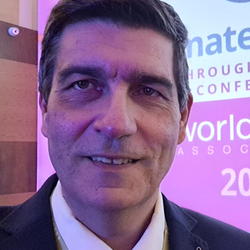
RINA
Mr. Cirilli has a master’s degree in chemistry (1996) and then specialised in materials research and manufacturing processes. At RINA he is responsible for decarbonization and energy transition.
With over 28 years’ experience in ironmaking and steelmaking, Filippo has worked on several aspects of ironmaking and steelmaking processes and is responsible for the HYDRA project, the largest project in Italy for the decarbonization of the entire steel production process, which has been approved by the European Union and funded by MIMIT, Italina Minister of Enterprises and Made in Italy, with an estimated value of 90 million Euros.
JOIN OUR MAILING LIST
Be the first to hear about exhibitors, speakers and what's on at our upcoming events.